 Europe Warehouse Stock

growatt inverter 6kw 3 phase 48V Battery
Lithium Battery Supplier-

EU Stock EV Grade A EVE 3.2V 314Ah MB31 Rechargeable LiFePO4 Battery Cell
11% OFF Ship from China US$80.00
-

Gobel Power PC200B 51.2V LiFePO4 Battery Case DIY Kit
Ship from China US$518.00
-

Gobel Power GP-SR1-PC314 Premium 51.2V 314Ah 16kWh LiFePO4 Server Rack Battery
Ship from China US$3,430.00
-

REPT 3.2V 392Ah LiFePO4 Energy Storage Battery Cell
Ship from China US$89.00
-

Grade A EVE 3.2V 314Ah MB31 Rechargeable LiFePO4 Battery Cell
12% OFF Ship from China US$70.00
-

Gobel Power 51.2V 15kW Stackable LiFePO4 Battery
Ship from China Get Price
-

Eu Stock LiShen 3.2V 314Ah LiFePO4 Battery Cell
9% OFF Ship from China US$69.00
-

EU Stock EVE MB56 3.2V 628Ah LiFePO4 Battery Cell 8000 Cycles
Ship from China US$146.00
-

Gobel Power THOR 5000 5kWh Solar Home Inverter Battery Germany Designed
36% OFF Ship from China US$952.00


-

Solution LiFePO4 Battery Cell -

Solution Solar Battery
Recently, I started paying much closer attention to how our solar battery was actually working, especially during the expensive evening hours. Before the installation, our solar panels exported a lot of energy during the day, then we bought electricity back from the grid after dinner. That felt wasteful, even though the panels were producing well.
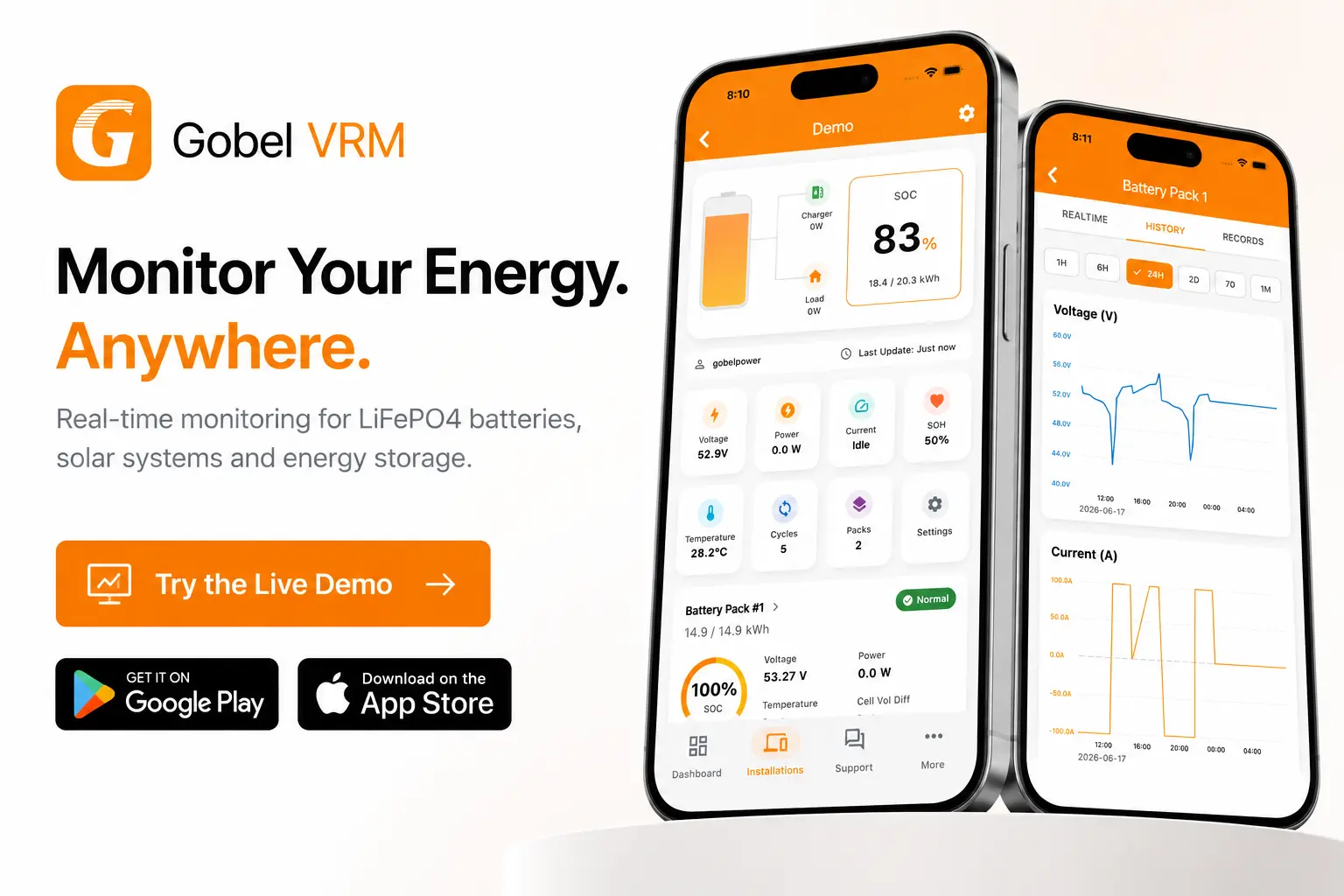
Our setup uses a growatt inverter 6kw 3 phase 48V Battery, along with a home solar battery system and rooftop solar panels. The biggest improvement has been shifting our evening usage. The battery charges from surplus solar around midday, then runs the refrigerator, lights, Wi-Fi, washing machine, and television after sunset. I usually check the inverter app while cooking, and it is satisfying to see the house drawing from stored solar energy instead of the grid.
Our peak-hour electricity bill has dropped noticeably. We used to have several high-cost evenings each week, particularly when someone was home early or we used the electric oven. Now the battery covers most of that period. The exact savings vary with weather and our usage, but our monthly bill is roughly 35–45% lower than before. We still import power on cloudy days, so I would not describe the system as completely independent, but the difference is very practical.
I did have one minor troubleshooting moment. After a firmware update, the battery stopped discharging overnight even though it showed a healthy charge level. I checked the operating schedule and found that the time-of-use setting had reset, preventing discharge during our selected hours. Restoring the schedule fixed it immediately. That experience taught me not to assume a hardware fault whenever the battery behaves strangely.
For me, the value of energy storage is not just the backup power. It is the everyday control over when I use my own solar electricity. The system quietly reduces grid dependence, and that is something I notice every time the evening bill data arrives.